
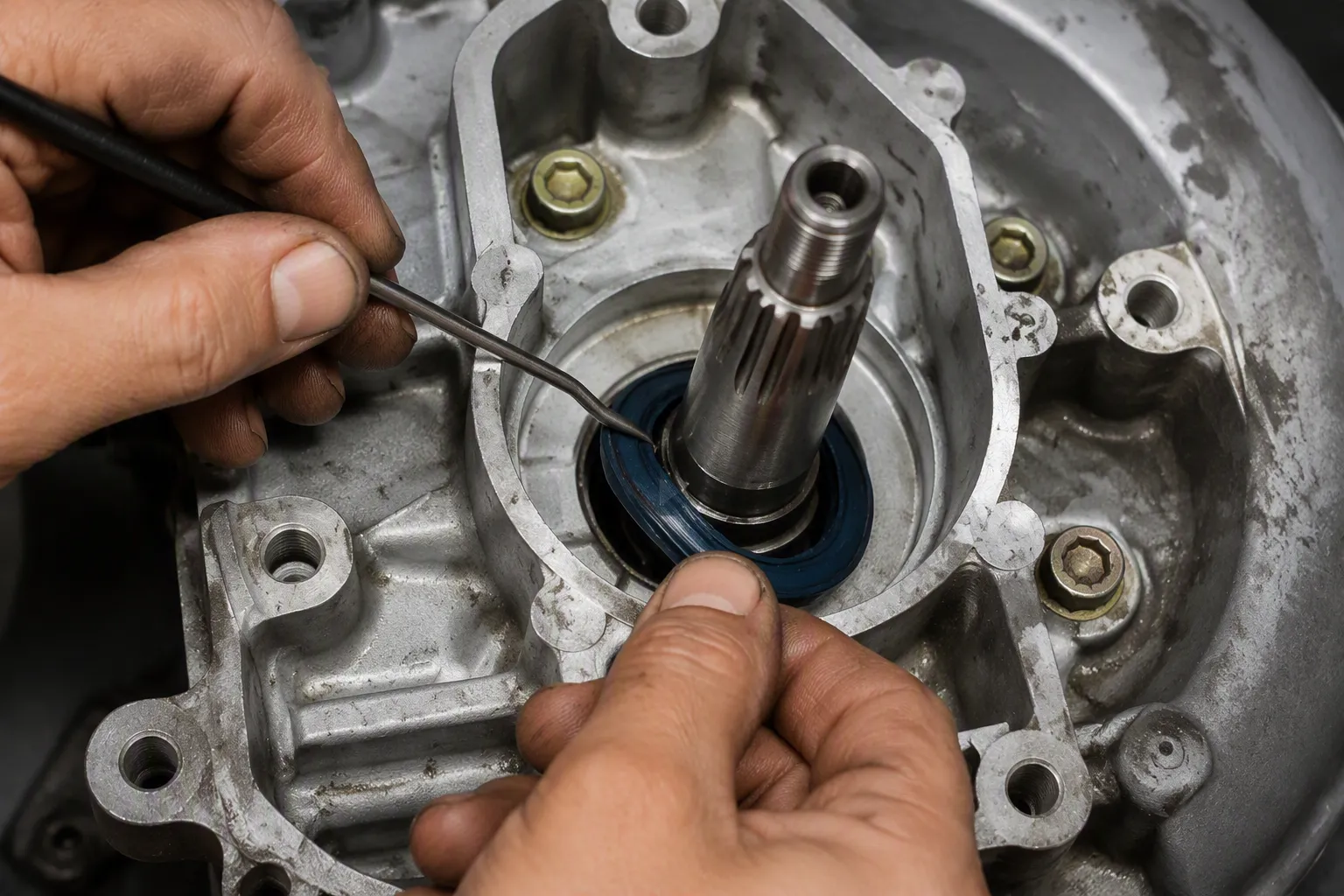
I need to replace a gasket. How can I find out which one I need?
How to identify a sealing gasket and find the right replacement
Do you need to replace a gasket and don’t know which one to buy? Discover how to identify the gasket type, its dimensions, and the appropriate material to find the right replacement.
When a gasket starts to lose its seal or it’s time to replace it, a common question arises: which replacement part do I need exactly? Correctly identifying a gasket is essential to avoid errors, reduce downtime, and ensure reliable operation of the machine or equipment.
First: identify the type of joint
The first step is to determine what type of sealing element needs to be replaced. There are numerous types of seals, each with a specific function.
A good way to start is to consult our sealing product catalog and compare the part to be replaced with the different profiles available. Among the most common solutions are O-rings, flat seals, retainers (usually identifiable by their internal spring), dust seals (similar to a retainer but without a spring), as well as rod seals and piston seals, whose name depends on their location within the hydraulic or pneumatic system. Among the elements that function as dust seals, V-shaped seals are also common, such as V-Rings when made entirely of elastomer, or RE-type axial seals when they incorporate a metal casing. Other options include Quadrings or X-profile seals, floating seals used in certain hydraulic applications, or even backup rings designed to work with O-rings to prevent extrusion under pressure. In other cases, spacer or adjusting rings may also be found, whose main function is to compensate for tolerances or add thickness to the assembly.
In many cases, a simple visual comparison of the profile allows you to narrow down the search considerably.
Recorded references can be very helpful
If the original gasket has any code, reference, or engraved mark, this information can be extremely valuable in identifying the exact product.
Similarly, if you have a physical sample or a photograph, our technical team can analyze it to help you locate the correct replacement part. For best results, it is important that the images are clear, taken at close range, and clearly show both the gasket profile and any markings or references engraved on it.
Don't know the dimensions? Measure the shaft and the housing
One of the most common mistakes is directly measuring the gasket to obtain its dimensions. When a gasket has been in use for years, it may have suffered wear, deformation, or dimensional changes due to temperature, pressure, or material aging.
Furthermore, during the disassembly process, it is common for some gaskets to become deformed or damaged, so the measurements obtained may not be reliable. It is important to note that the inner diameter of gaskets is usually smaller than that of the shaft they are installed on in order to provide the necessary sealing function.
For this reason, when the original dimensions are unavailable, it is preferable to measure the components where the seal operates, i.e., the shaft, rod, piston, or housing, as applicable. These measurements usually provide much more precise information for identifying the correct replacement part.
Consult the machine documentation
Maintenance manuals, exploded views, and manufacturer’s instructions often contain very useful references to gaskets and other sealing components. Any code, designation, or measurement indicated in the documentation can greatly facilitate the identification process. Whenever possible, it is advisable to attach a photograph or copy of the page where the reference appears.
The material is just as important as the dimensions.
Once the gasket type and dimensions have been identified, one crucial aspect remains: determining the most suitable material. If the elastomer of the original gasket is unknown, several technical questions will need to be answered to determine the most appropriate option. Among the most important data are:
• The fluid or product with which it will be in contact.
• The working temperature.
• The operating pressure.
• The speed of rotation or displacement, when there is movement.
These parameters are fundamental to correctly selecting the material and ensuring good chemical compatibility, a long service life, and safe operation.
Please indicate the urgency of the replacement.
Finally, it’s important to let us know how quickly you need the replacement part. Knowing the available timeframe allows us to prioritize the most suitable options, whether it’s a standard part available in stock or a custom solution requiring special manufacturing.
Do you need help identifying your gasket?
At OSN SEALS, we help customers across all sectors every day to locate seals, O-rings, hydraulic seals, dust boots, and all types of sealing components. If you provide us with photos, part numbers, measurements, or any other available information about the application, our technical team will help you find the most suitable solution in the shortest possible time.

