
Retaining ring applicators, dispensers and pliers: how to choose the right tool
Retaining rings are essential components for the axial retention of parts on shafts and in bores. Although their operating principle is simple, incorrect installation may cause deformation, assembly difficulties or even premature failure of the assembly. For this reason, using the correct tool is just as important as selecting the appropriate retaining ring.
Depending on the type of ring, installation frequency and working conditions, there are three main tool families: retaining-ring dispensers, applicators and pliers. Each performs a specific function and is designed to improve speed, accuracy and safety during installation and removal operations.
Dispensers: the best solution for repetitive assembly operations
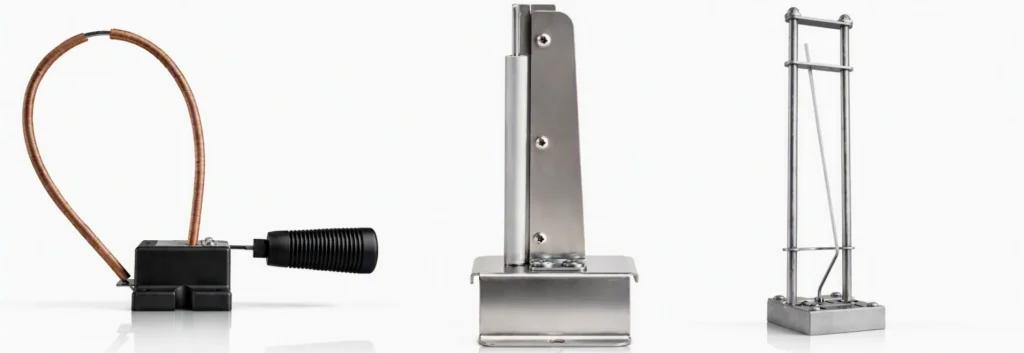
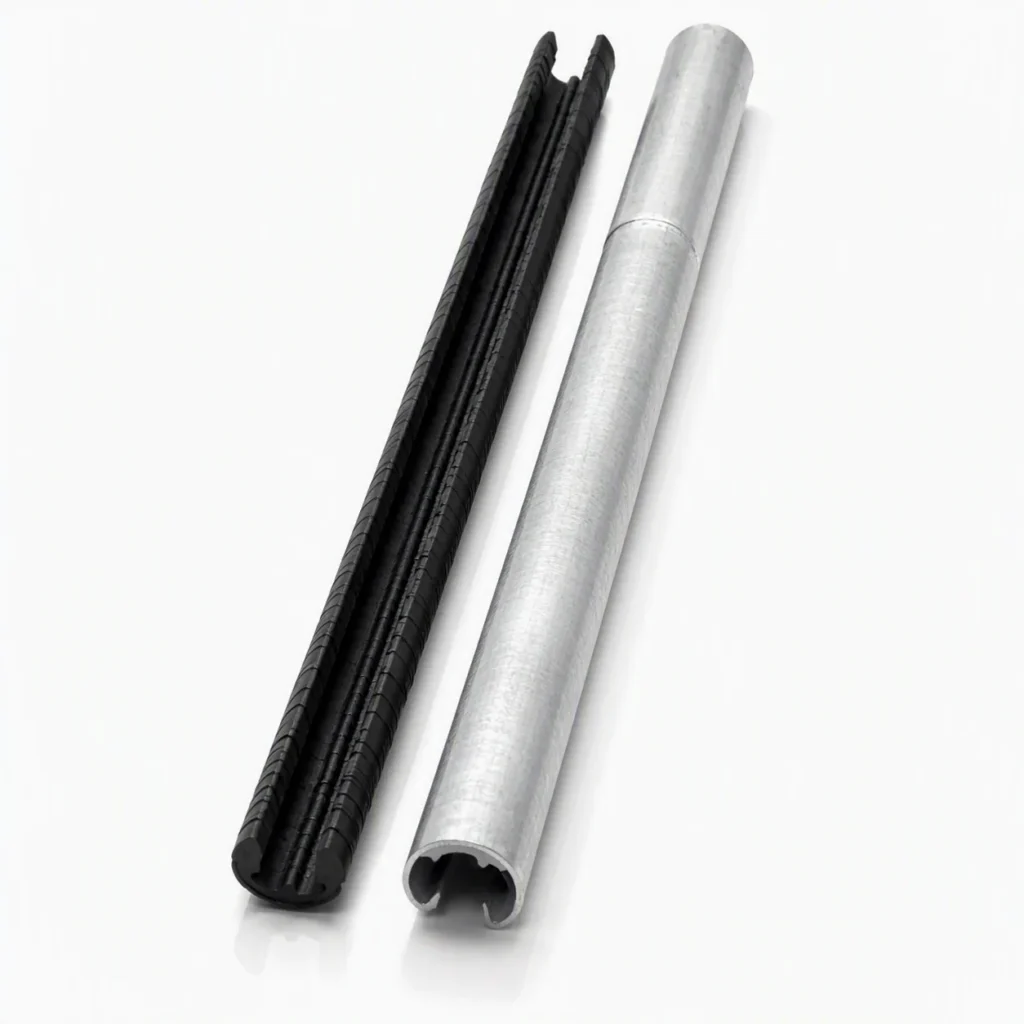
Dispensers are designed to store and present retaining rings in an orderly manner, allowing the operator to remove them one at a time and install them using a compatible applicator. Their main advantage is reduced handling time and improved repeatability in continuous assembly processes.
When hundreds or thousands of rings are installed each day on a production line, handling them individually can slow down the process and increase the risk of errors. Dispensers keep the rings correctly oriented and ready for installation, significantly streamlining the work.
When should a dispenser be used?
- On repetitive assembly lines.
- When increased productivity is required.
- To reduce handling errors.
- At workstations where large quantities of retaining rings are installed every day.
Main types of dispensers
Applicators: fast and accurate installation of radial retaining rings
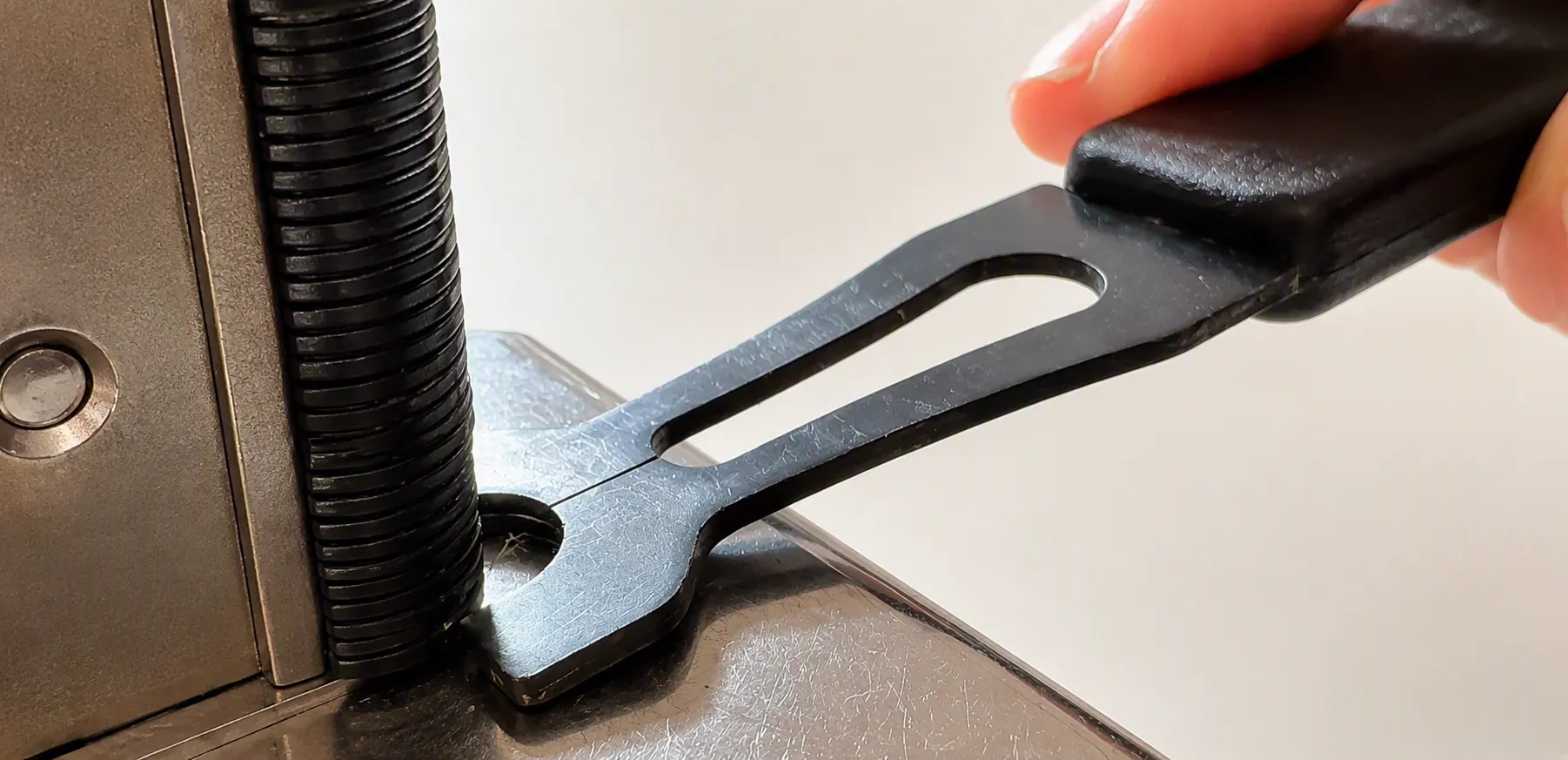
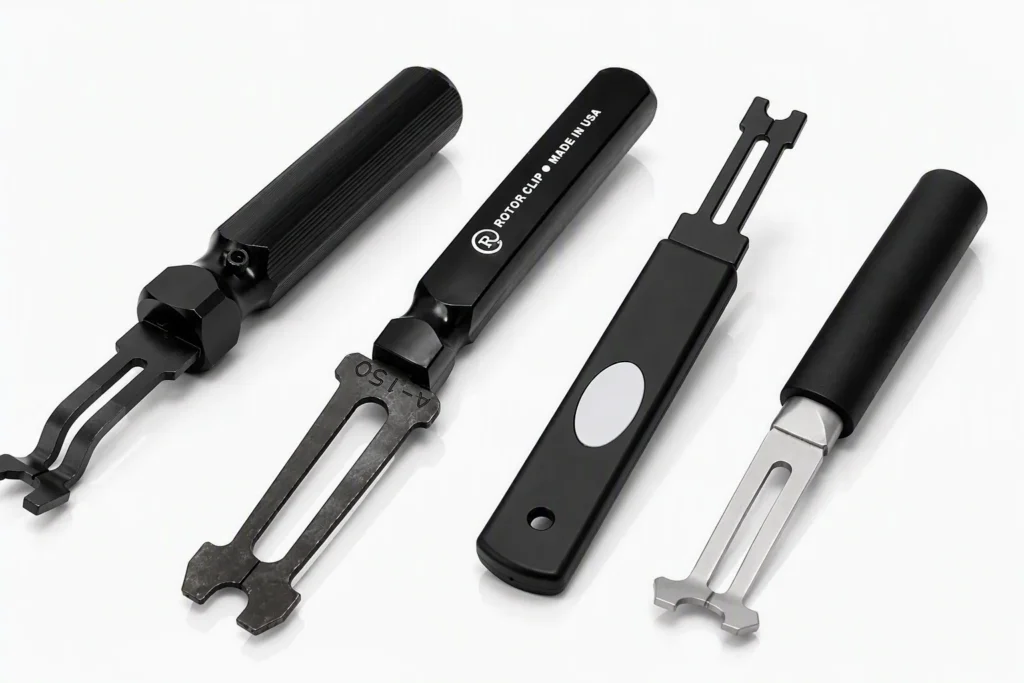
Applicators are designed for the fast, controlled and repeatable installation of radial retaining rings on shafts. They are used together with dispensers, enabling the ring to be loaded and advanced into its groove without rotating the tool during the operation.
The applicator’s main advantage is that it guides the ring into the correct position, reducing the risk of faulty installation and improving assembly consistency.
When should an applicator be used?
- When installing radial retaining rings on shafts.
- In repetitive production processes.
- When fast and uniform placement is required.
- In applications where minimising installation errors is important.
Types of applicators
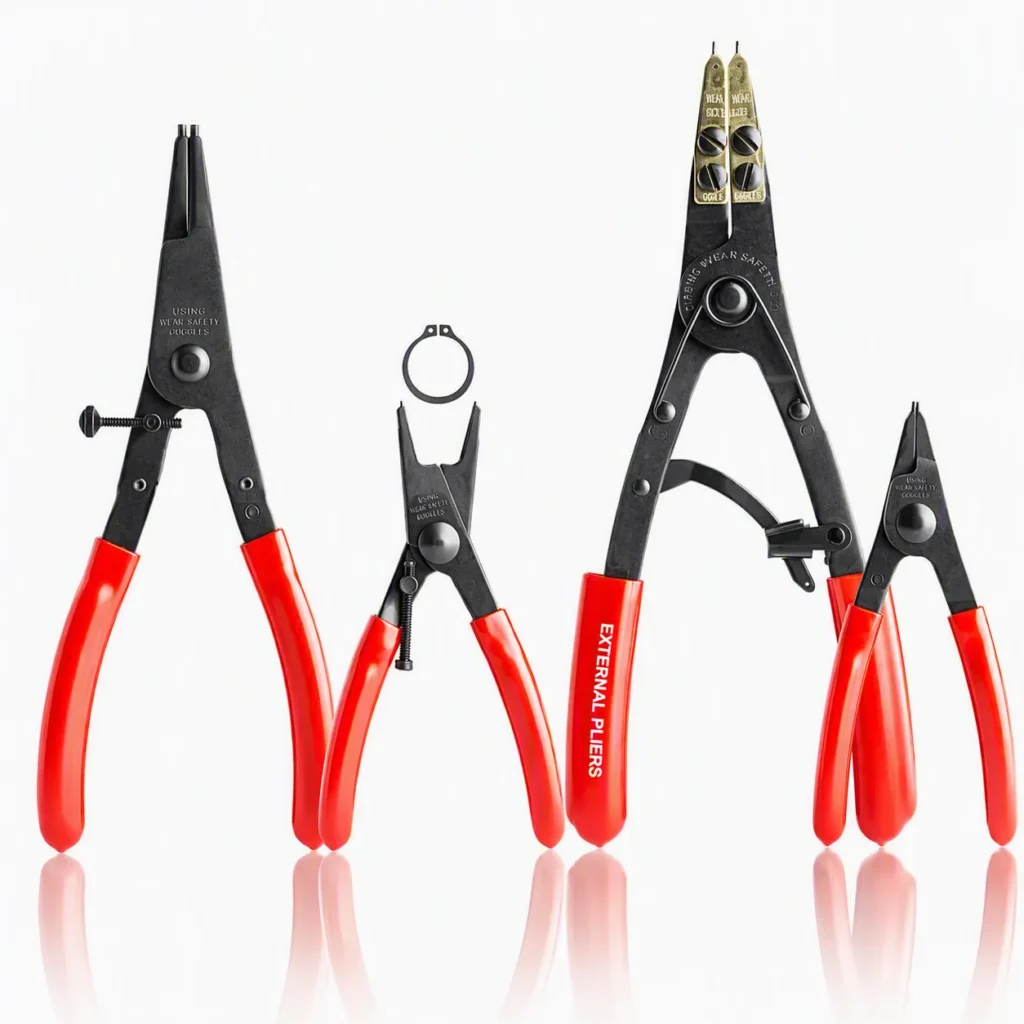
Pliers: the essential tool for installation and removal
Retaining-ring pliers are the most versatile tool when the ring geometry does not permit the use of a dispenser or applicator. In many cases, particularly with rings featuring lugs or installation holes, installation and removal can only be performed using pliers, as these tools allow the ring to be expanded or compressed in a controlled manner for correct seating in its groove.
Different types of pliers are available to suit the ring and application: for internal or external retaining rings, in metric or inch sizes, with straight or angled tips, as well as reinforced, convertible or ratcheting versions for large diameters or more demanding work.
Recommendations for safe and effective installation
For best results, always select the correct tool for the ring type, diameter and working conditions. Using an unsuitable tool may cause deformation, reduced productivity or installation difficulties.
Safety glasses should also be worn when installing and removing retaining rings, as these components store elastic energy and may be accidentally ejected.


