
The magnet test: the most common mistake when identifying stainless steel
Can you tell whether a retaining ring, a washer or a bolt is stainless with a simple magnet?
Why do some stainless steels attract a magnet?
The answer lies in the metallurgical structure of stainless steel. Austenitic stainless steels, such as the well-known AISI 304 (A2) and AISI 316 (A4), usually show very weak magnetic attraction or none at all. For this reason, many people wrongly associate the absence of magnetism with the presence of stainless steel.
However, there are other types of stainless steel, such as martensitic and ferritic grades, which are perfectly stainless and, at the same time, clearly magnetic. What is more, even an AISI 304 or AISI 316 stainless steel can acquire some magnetism after cold forming, stamping, rolling or thread rolling.
In other words, the fact that a part attracts a magnet does not necessarily mean that it is not stainless. At OSN we supply many products made from stainless steel grades which, because of their composition or the forming processes they have undergone, can show noticeable magnetic attraction. Quite often, some customers carry out the magnet test and contact us because they believe there has been a mistake with the material supplied. That is precisely why we have prepared this article, to explain why magnetism on its own does not make it possible to determine whether a part is stainless steel or not.
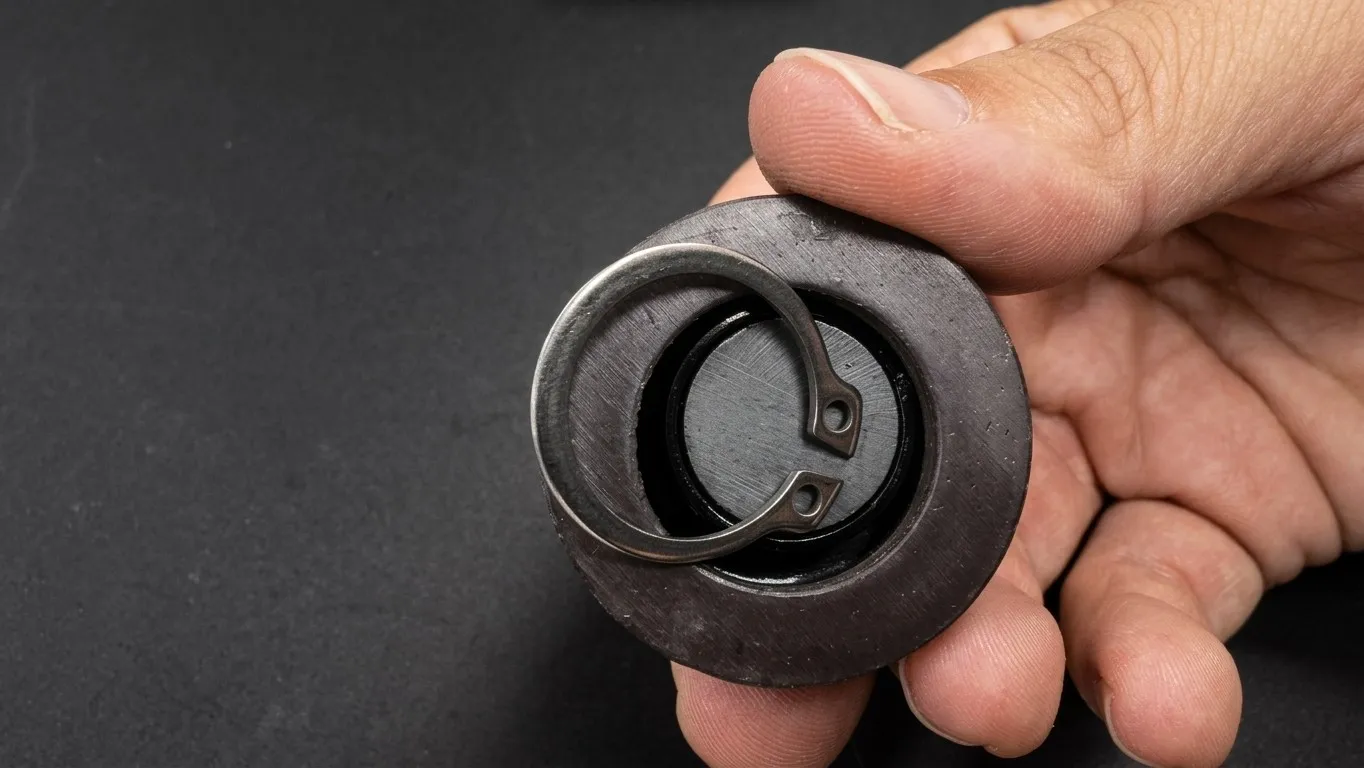
The case of retaining rings
Nor is everything that is non-magnetic stainless
And what about the water test?
Some people recommend immersing the part in water for more than 24 hours to check whether it is stainless. This test can give a practical indication, but it also has its limitations. If all you want is a rough check at home, prolonged exposure to water is more representative than the magnet test, since it lets you observe directly how the part behaves against corrosion. Even so, this test does not confirm on its own that the material is stainless, as the result depends on the type of water, the temperature, the exposure time and the condition of the surface.
Many carbon steel bolts, nuts and washers have zinc or nickel coatings or other anti-corrosion treatments that can protect the surface for days or even weeks without showing signs of rust. For this reason, the fact that a part shows no rust after 24 hours, or even after a week of immersion, does not prove that it is stainless. On the other hand, the rapid appearance of uniform, widespread corrosion is a clear sign that the part is probably not made of stainless steel or that its surface protection is inadequate. Small isolated spots, however, may be due to contamination with iron particles, machining residues or deposits from the water, without the base material being wrong. The water test can therefore help to rule out certain materials fairly quickly, but it does not make it possible to identify or certify the exact grade of the steel.
In short, the water test can give more useful indications than the magnet test about corrosion resistance, but neither of the two makes it possible to identify the grade of the steel with certainty. To verify it, you need to consult the manufacturer’s certificate or carry out a chemical analysis.
How do you really identify stainless steel?
Conclusion
The popular magnet test is one of the biggest myths surrounding stainless steel. A bolt, a washer or a retaining ring can be completely stainless and still attract a magnet because of its composition or its manufacturing process. In the same way, simply immersing it in water does not allow the material to be identified with certainty either, although it can quickly give some indications about its corrosion resistance.
When the application is critical, the only way to guarantee the material is to rely on the manufacturer’s certification or on a suitable chemical analysis.
At OSN we recommend being wary of quick conclusions, in metallurgy a magnet can reveal a few clues, but never the whole truth.


