
Changing the spring in an oil seal
Why Change the Spring in an Oil Seal?
The circular spring maintains a controlled radial force on the sealing lip to preserve contact with the shaft. It also helps compensate for lip wear and changes in elastomer stiffness caused by temperature, the operating fluid and service time. In oil seals, the most common design is supplied as standard with a carbon steel spring, which is suitable for many lubricated applications and non-corrosive environments.
However, when the seal must operate in contact with water, moisture, salts or other oxidising or corrosive media, carbon steel may not be the best option. If the available seal meets all the other application requirements, its spring can be replaced with a stainless steel version, avoiding the lead time associated with a complete custom-made seal.
Types of Stainless Steel
Among the available options, AISI 302 is one of the most widely used materials for spring manufacture due to its good elasticity and mechanical strength. When the application requires greater protection against moisture and the corrosion normally encountered in many industrial environments, AISI 304 may be selected. For more demanding conditions, particularly in the presence of salts, corrosive environments or certain chemicals, AISI 316 provides a higher level of corrosion resistance.
The selection must always be based on the fluid, temperature, concentration, speed, pressure and exposure time. Replacing the spring improves its corrosion resistance, but does not in itself alter the chemical compatibility or operating limits of the elastomer or the seal construction.
What Information Do We Need to Select the Spring?
Do Seal Thickness and Pressure Affect Spring Selection?
Yes, but with an important qualification. For each shaft diameter range, there are standard combinations of spring body diameter, wire diameter, length, initial tension and load. These variables determine the radial force transmitted by the spring to the sealing lip. However, the maximum pressure that the assembly can withstand does not depend on the spring alone: it is also influenced by the lip profile and stiffness, interference with the shaft, elastomer, speed, temperature, lubrication, eccentricity and the seal support design.
It is therefore not advisable to select a thicker wire solely because the operating pressure is higher. Insufficient radial load may promote leakage, whereas excessive load increases friction, temperature and wear on both the sealing lip and the shaft. For pressurised or non-standard applications, OSN should review the complete assembly before recommending a spring.
Closed Rings or Cut-to-Length Spring
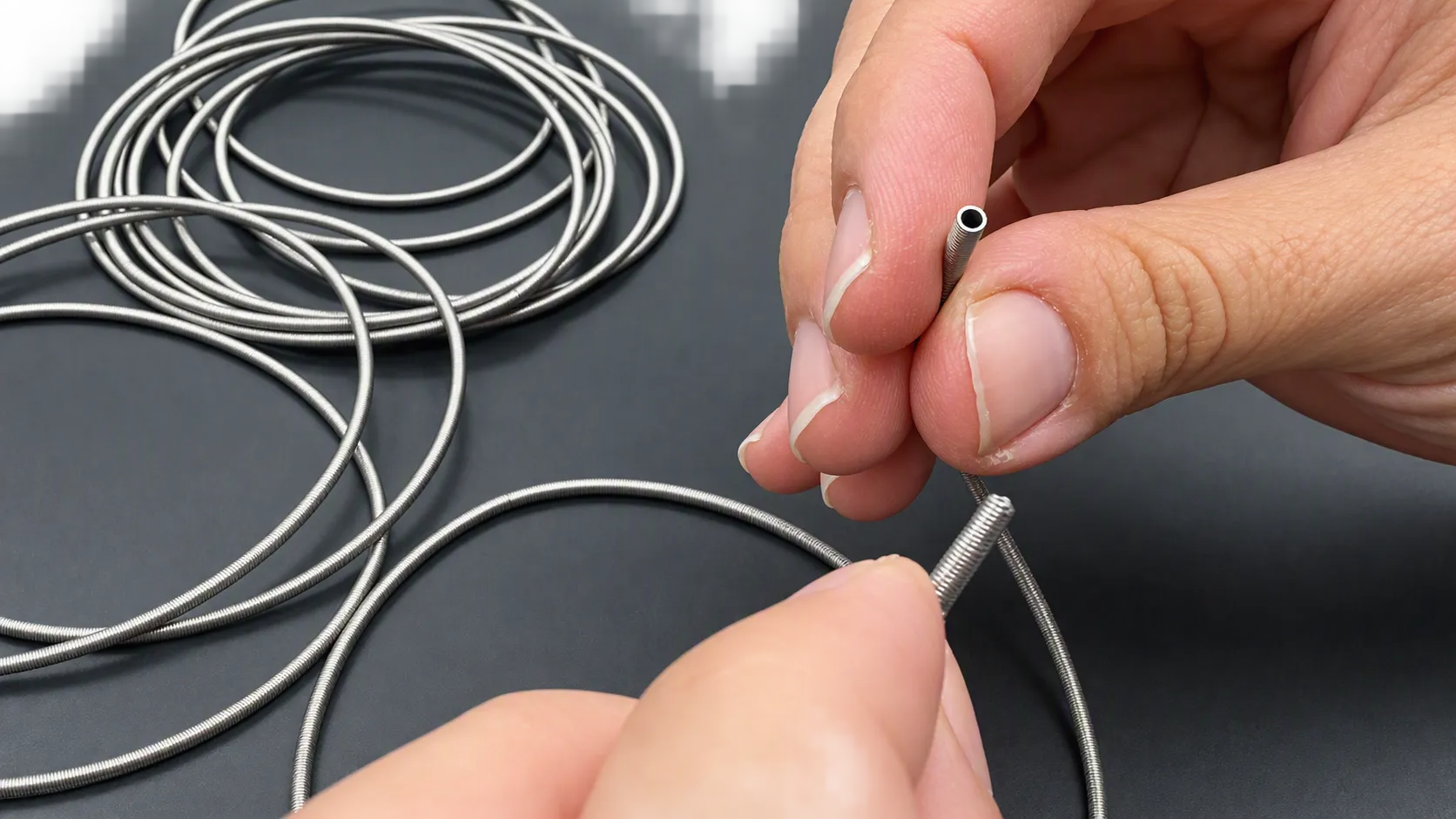
We supply springs pre-assembled as closed rings, ready for installation in the seal. For less common sizes or more specific requirements, we can also supply spring in continuous lengths. It is cut to the required size and closed using a special interlocking system, by inserting and screwing the prepared end into the opposite end until a continuous ring is formed.
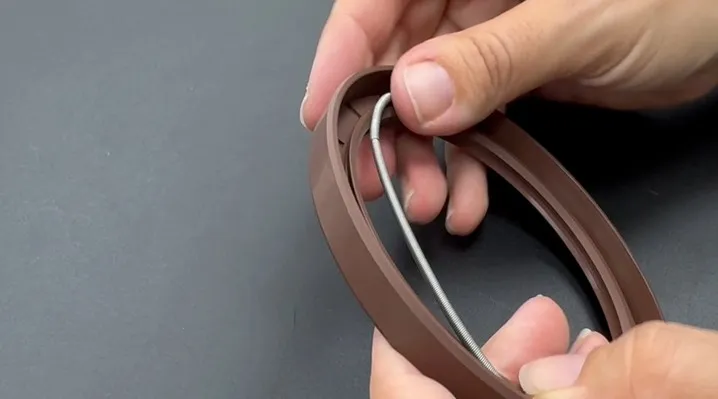
In our technical video, we show step by step how to cut the spring to the correct length and properly make the joint using the interlocking system. A correctly made joint must be secure, continuous and free from deformation that could affect the way the spring bears against the lip. You will also see how to remove the spring from the seal and correctly install the replacement.


