
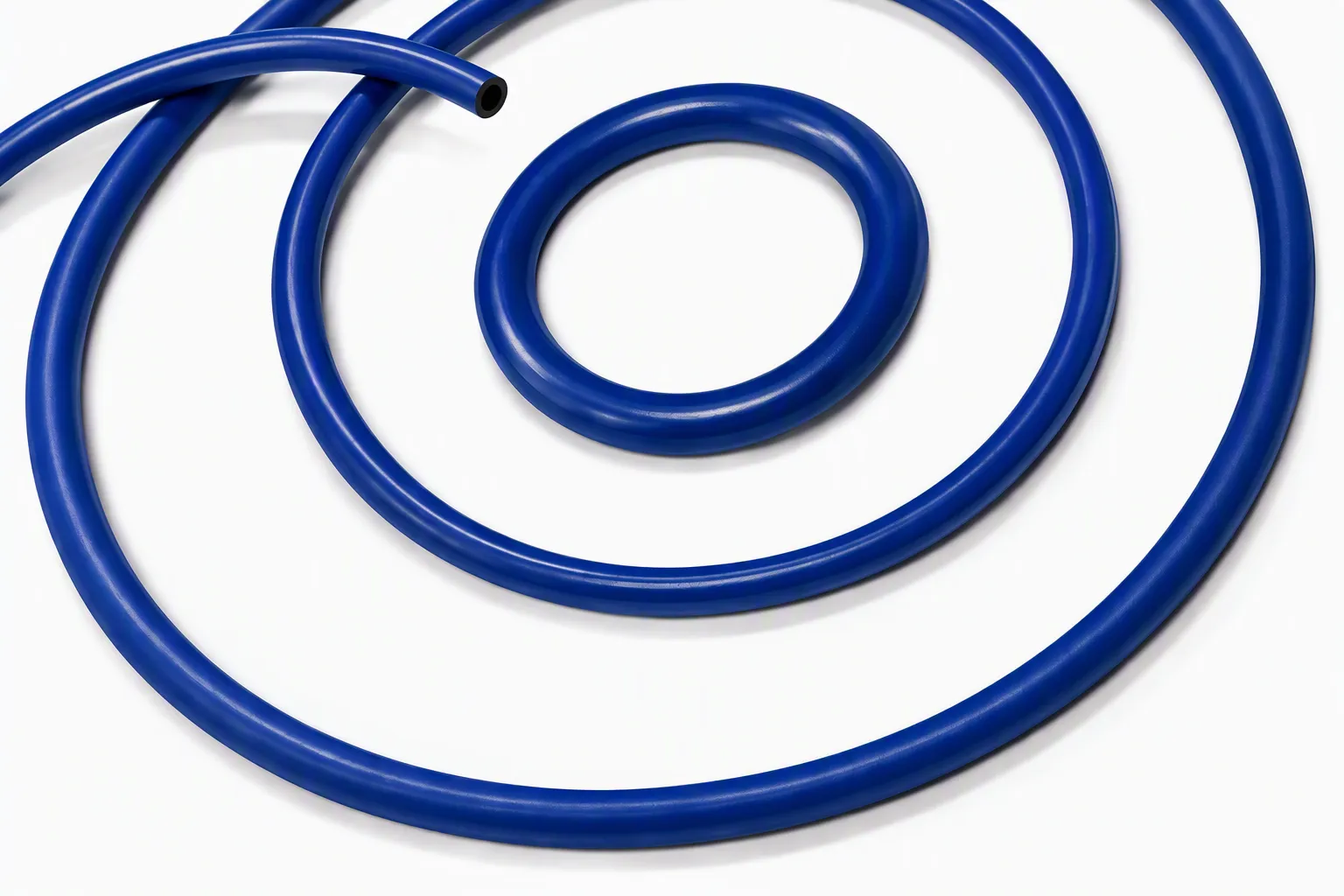
PTFE-Coated O-Rings: Lower Friction, Safer Installation
PTFE-coated O-rings combine the elasticity of an elastomer with a very low-friction surface. This solution simplifies installation, reduces assembly damage and improves initial sealing performance in appropriately selected applications.
What Is a PTFE-Coated O-Ring?
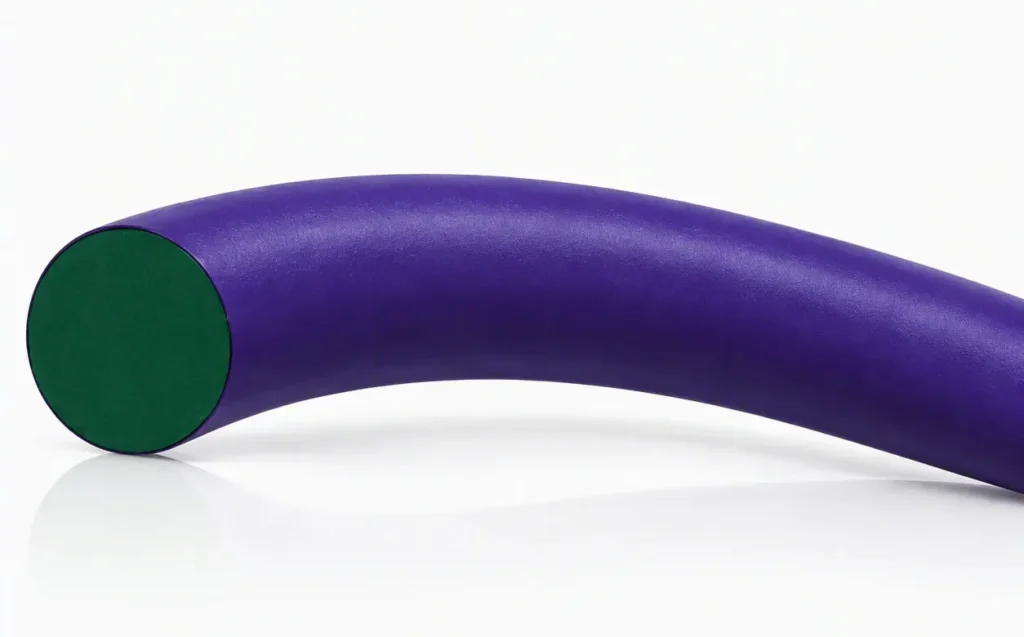
It is an elastomeric O-ring—made, for example, from NBR, FKM, EPDM or HNBR—whose surface is covered with a thin film of polytetrafluoroethylene (PTFE). The core provides flexibility, elastic recovery and contact pressure, while the coating provides a dry, non-stick surface with a low coefficient of friction.
It should not be confused with an O-ring manufactured entirely from PTFE. A solid PTFE O-ring is more rigid and has considerably less elastic recovery, so it is intended for different design requirements.
PTFE-coated O-rings should also not be confused with FEP/PFA-encapsulated O-rings. In the former, the PTFE is a thin surface film intended primarily to reduce friction and facilitate installation, whereas encapsulated O-rings incorporate a continuous FEP or PFA jacket that completely surrounds the elastomeric core and acts as a barrier against the medium.
Key Benefits
- Easier installation: reduces friction when fitting the O-ring into close-tolerance housings or grooves.
- Lower risk of damage: helps prevent pinching, twisting, sticking and tearing during assembly.
- Lower breakaway torque: reduces the initial force required to set certain components in motion.
- Fewer stoppages in automated lines: supports more consistent feeding and assembly.
- Lower initial running friction: can improve performance during commissioning.
- Improved performance after storage: limits the tendency of components to stick after prolonged periods of inactivity.
- Visual identification: the coating can be supplied in any colour; the customer only needs to specify the required RAL code. This simplifies the identification of part numbers, materials or sizes on the assembly line.
Where Can They Add Value?
They are particularly useful when the main challenge is installation or the reduction of surface friction: static connections, valves, pumps, dosing equipment, hydraulic and pneumatic systems, industrial automation, and mechanisms involving slow or intermittent motion.
They may also be considered for environments involving oils, fuels, solvents or other demanding fluids. However, chemical and thermal compatibility should not be assessed solely on the basis of PTFE: the core material remains critical to sealing performance.
Limitations to Consider
The coating is a thin layer and may wear in high-speed, continuous or highly abrasive motion. A coated O-ring is therefore not automatically the best option for every dynamic seal. If the coating deteriorates, the properties of the underlying elastomer are exposed and particles may be generated.
Likewise, the actual temperature range of the complete seal is primarily determined by the elastomeric core. A PTFE surface coating does not compensate for an unsuitable base-material selection. The PTFE coating is intended mainly to reduce friction and facilitate O-ring installation.
How to Select the Right Solution
Before specifying a PTFE-coated O-ring, the following factors should be reviewed:
- the fluid and its concentration;
- the minimum, maximum and continuous operating temperatures;
- whether the seal is static or dynamic;
- the speed, frequency and stroke of the movement;
- the pressure, surface finish and housing geometry;
- cleanliness requirements and the acceptable risk of particle generation;
- the core elastomer and its compatibility with the process.
Conclusion
PTFE-coated O-rings are an effective technical solution when the aim is to reduce friction, improve installation and prevent sticking. Their final performance nevertheless depends on the correct selection of the base elastomer and the actual service conditions. They are not a universal solution: the core, coating, housing and application must be assessed as an integrated system.
Are you unsure which O-ring and coating your application requires? At OSN, we manufacture these O-rings to customer specifications, in the RAL colour selected by the customer, with a four-week lead time. Our technical team can help you assess the fluid, temperature, movement and installation conditions in order to select the most suitable solution.


