Piston seal PSV

Description
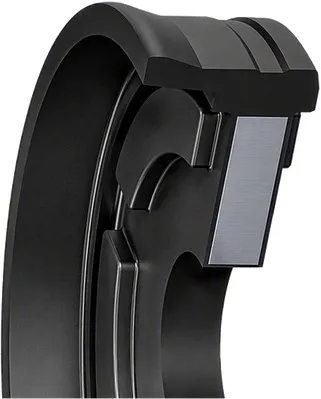
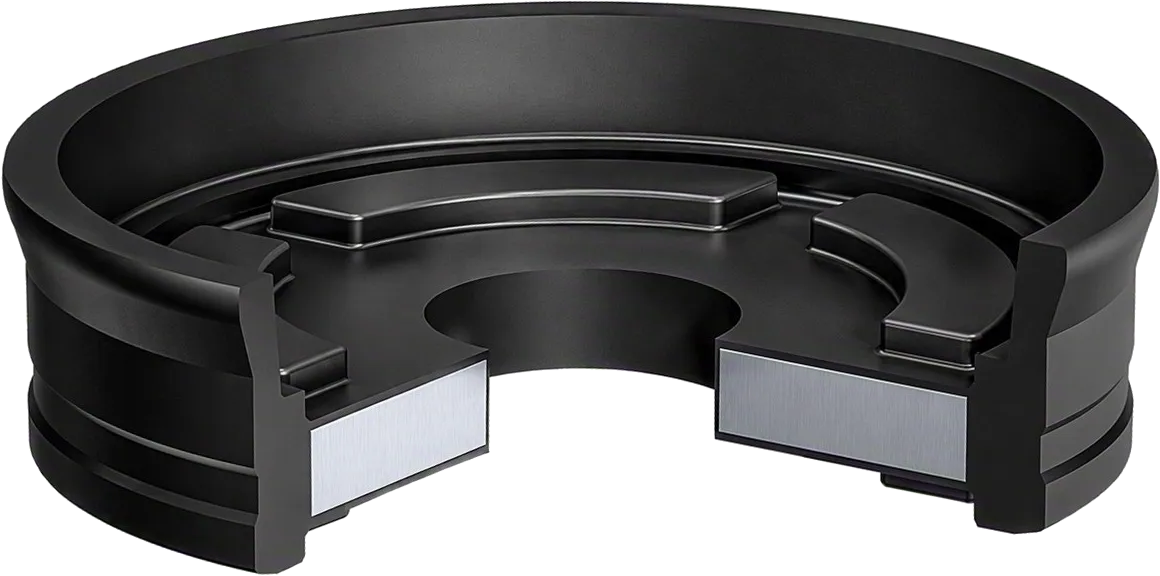
The PSV profile is a piston seal for pneumatic cylinders, designed with a supporting body and rubber lips to ensure sealing and guidance in applications with higher pressure requirements than a standard seal.
Assembly
Installation and maintenance: fit the PSV in a clean, burr-free piston housing, applying light lubrication if the application allows it. Avoid twisting during assembly and periodically check wear, pressure and the condition of the lips.
Advantages
Materials
Materials and hardness: the PSV profile can be manufactured in NBR and FKM, with a hardness of 80 Shore A. The compound selection must be adapted to the working temperature, fluid, pressure and specific conditions of the pneumatic application.
Technical data
NOØDØdHhØdah1Ødm
JP-25*8*7.9 PSV2587.96163.621
JP-32*8*10.65 PSV32810.656.516426.5
JP-40*10*12.4 PSV401012.47224.634
JP-40*14*13.4 PSV401413.4722434
JP-50*10*12.8 PSV501012.87.8254.643
JP-50*14*13.4 PSV501413.4725543
JP-50*16*14 PSV5016147.525543
JP-63*27*14.1 PSV632714.17404.657
JP-80*12*15.2 PSV801215.28555.670
JP-80*16*15.2 PSV801615.28555.670
JP-80*27*15.35 PSV802715.358.555672
JP-125*20*17.6 PSV1252017.69.5905.6114
JP-140*22*19.6 PSV1402219.610.51086.6125
JP-200*27*24.55 PSV2002724.5514.515010.6180
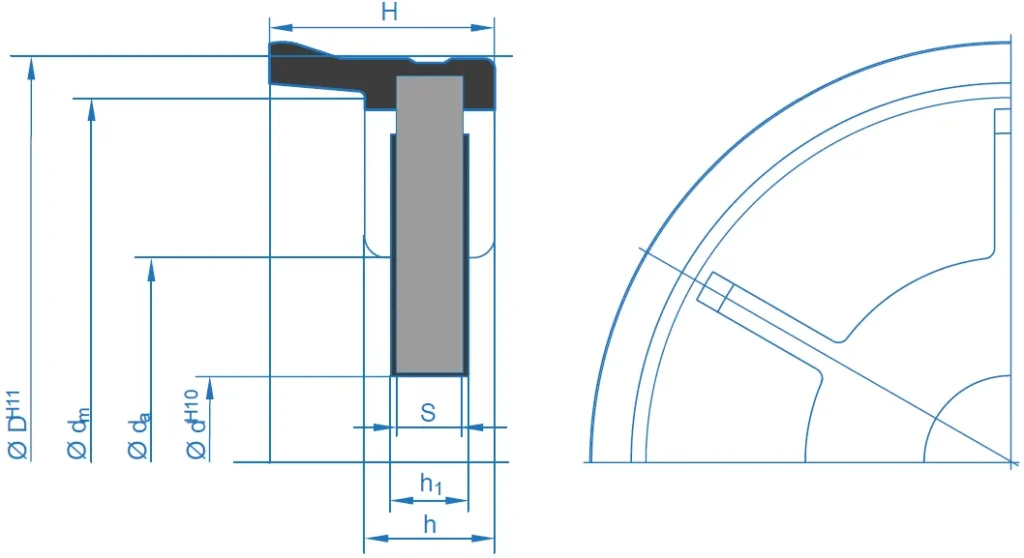
Technical drawing and installation parameters of the PSV piston seal
This technical drawing defines the dimensions and geometric variables that are essential for the correct selection and installation of the PSV piston seal, a profile with a supporting body and rubber lips intended for pneumatic cylinders with higher pressure requirements than a standard seal. It shows the critical dimensions linked to the size table, such as the outside housing diameter (ØD, to H11 tolerance), the inside mounting diameter (Ød, to H10 tolerance), the overall height (H), the lip height (h) and the height h1, together with the auxiliary diameters Øda and Ødm and the thickness S of the supporting body. Complying with these dimensions ensures correct seating in the piston housing, free from burrs and twisting, and stable guidance in diameters from 10 to 300 mm.
Three-dimensional view and components of the PSV piston seal
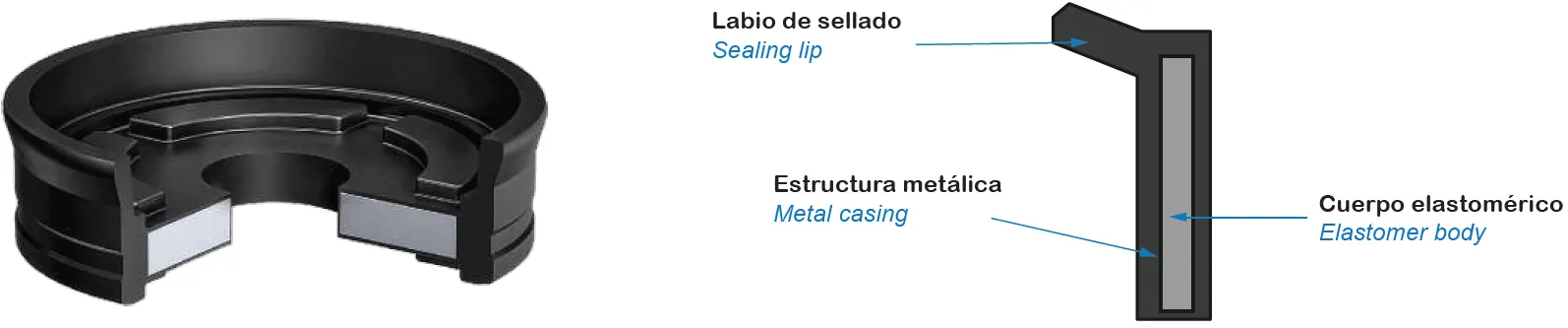
This 3D illustration shows the basic structure of the PSV piston seal. You will see its metal casing, which forms the supporting body and gives rigidity to the assembly, and the elastomer body bonded to it, from which the sealing lip that bears against the cylinder bore emerges. That composite construction is what allows it to work at higher pressures than a conventional elastomer seal while still guiding the piston. The lips are manufactured in NBR or FKM with a hardness of 80 Shore A, and the compound must be selected according to the working temperature, fluid and pressure.
Contacto OSN

Can we help you?

Our team will help you find the best solution and choose the optimal profile and material for your application.
Customer Area
Access for registered distributors and industrial suppliers.
E-shop
Direct purchase, with or without an account.